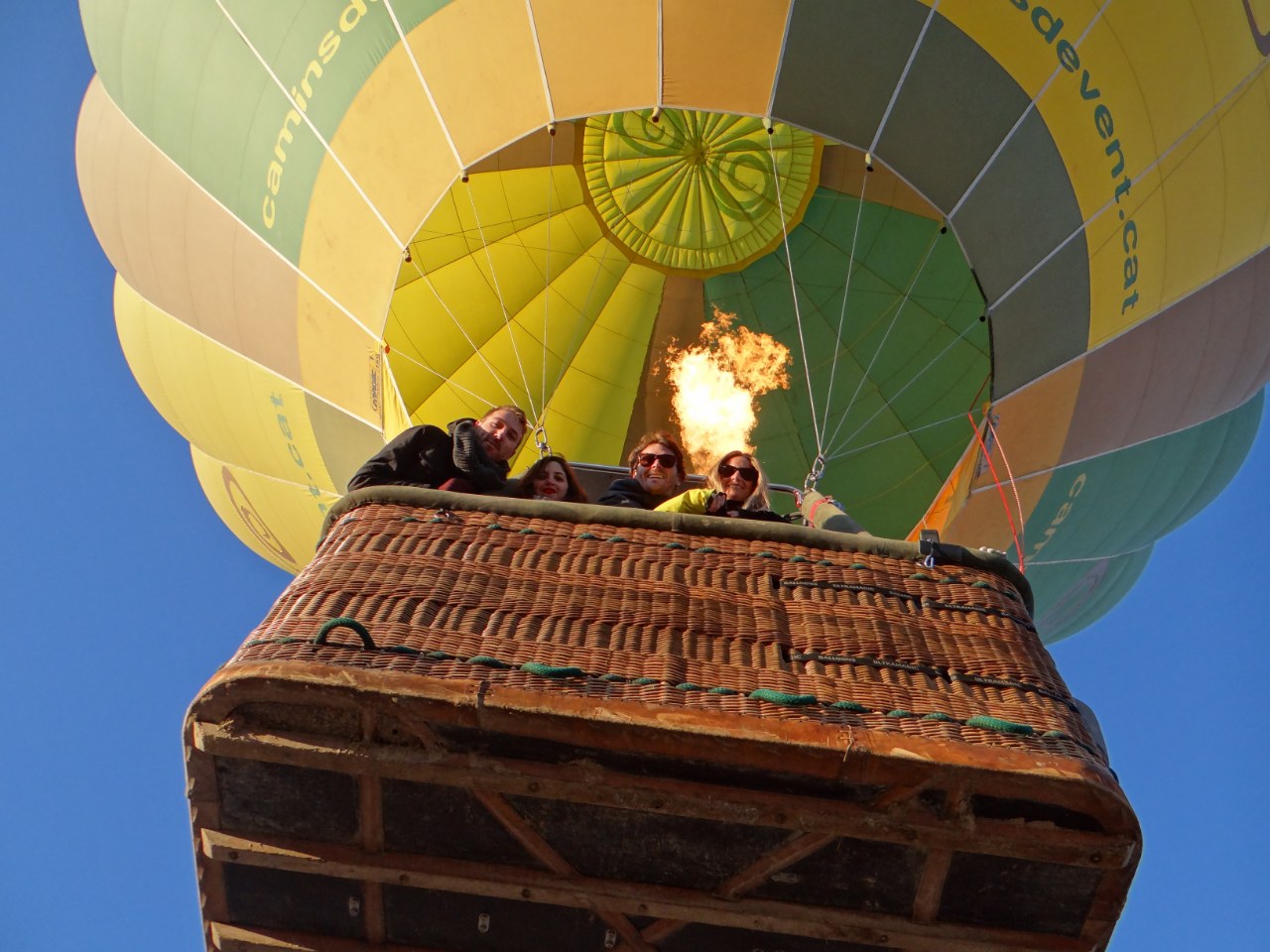
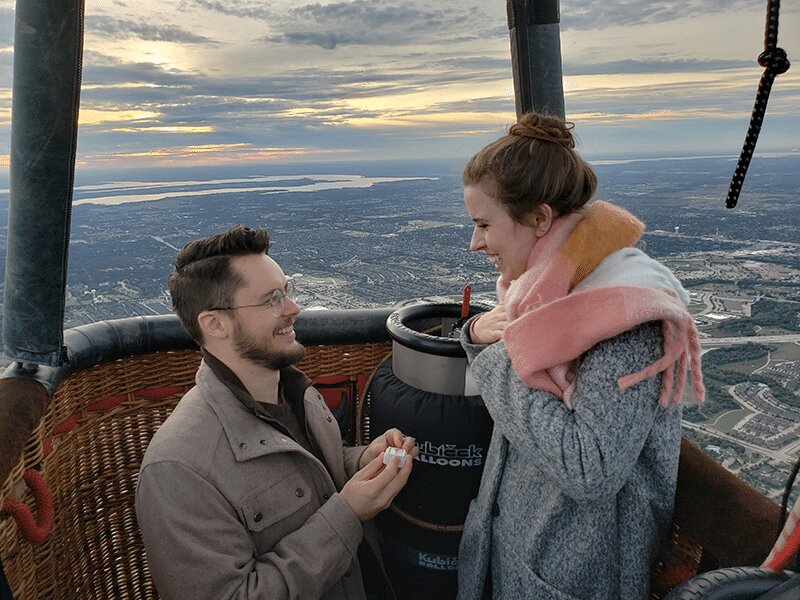
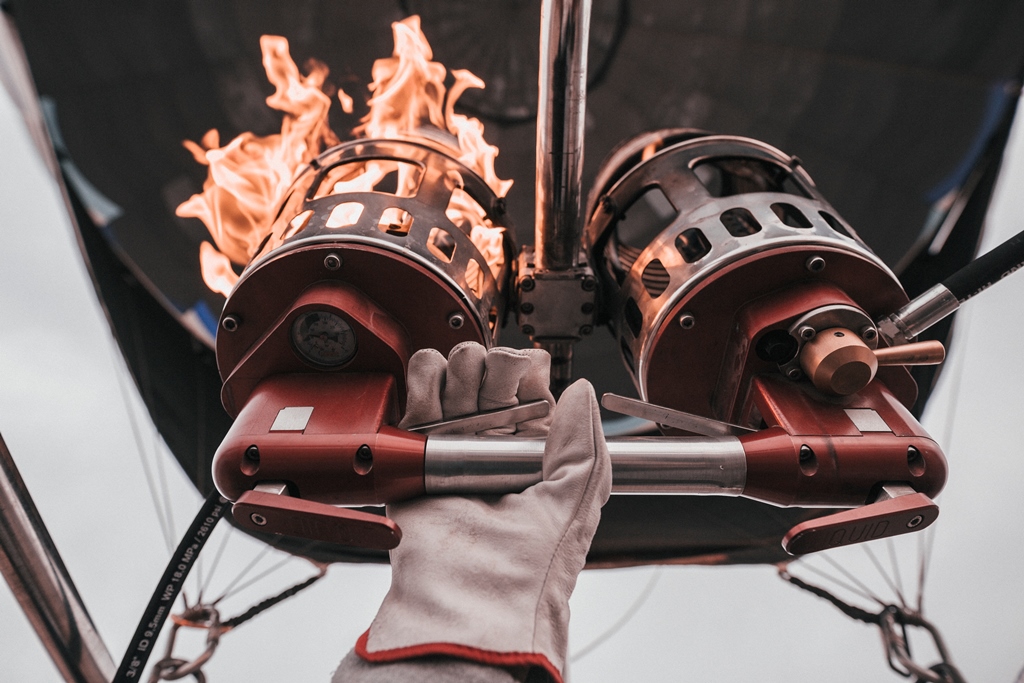
A hot air balloon has three parts: the envelope (the big fabric balloon), the burner (which heats the air) and the basket. When the burner warms the air inside the envelope, that air becomes less dense than the outside air and the whole balloon rises — the same principle Archimedes described for buoyancy, applied to air.
The three phases of a flight

Is it safe? Ballooning is remarkably calm and controlled. Our flights are led by EASA-certified pilots and covered by full passenger insurance, and we only fly in suitable weather — if conditions are not right, the flight is rescheduled. Balloons do not "pop": the envelope is open at the bottom and flies at low pressure, and the vent at the top simply lets air out slowly when it is time to descend.
The result is a slow, silent drift over Catalonia — Montserrat, the Pyrenees and the Costa Brava on the horizon — just outside Barcelona.
Check dates & book your flight near Barcelona
Frequently asked questions
How does a hot air balloon go up and down?
The pilot heats the air with the burner to rise, and lets it cool — or releases some through the top vent — to descend. Hot air is lighter than cold air, so the balloon floats.
Can you steer a hot air balloon?
Not with a wheel. The balloon moves with the wind, and the pilot changes altitude to catch winds blowing in different directions, which shapes the route.
What happens if a hot air balloon gets a hole or pops?
Balloons do not pop like party balloons: the envelope is open at the bottom and flies at very low pressure. A small tear would only let air escape slowly, and the pilot would descend calmly.
How do hot air balloons land?
The pilot opens a vent at the top to release hot air gently and guides the balloon down to an open, safe spot. The ground crew follows and helps pack up.
Is flying in a hot air balloon safe?
Yes. Flights are operated by EASA-certified pilots with full passenger insurance, and only take place in suitable weather.